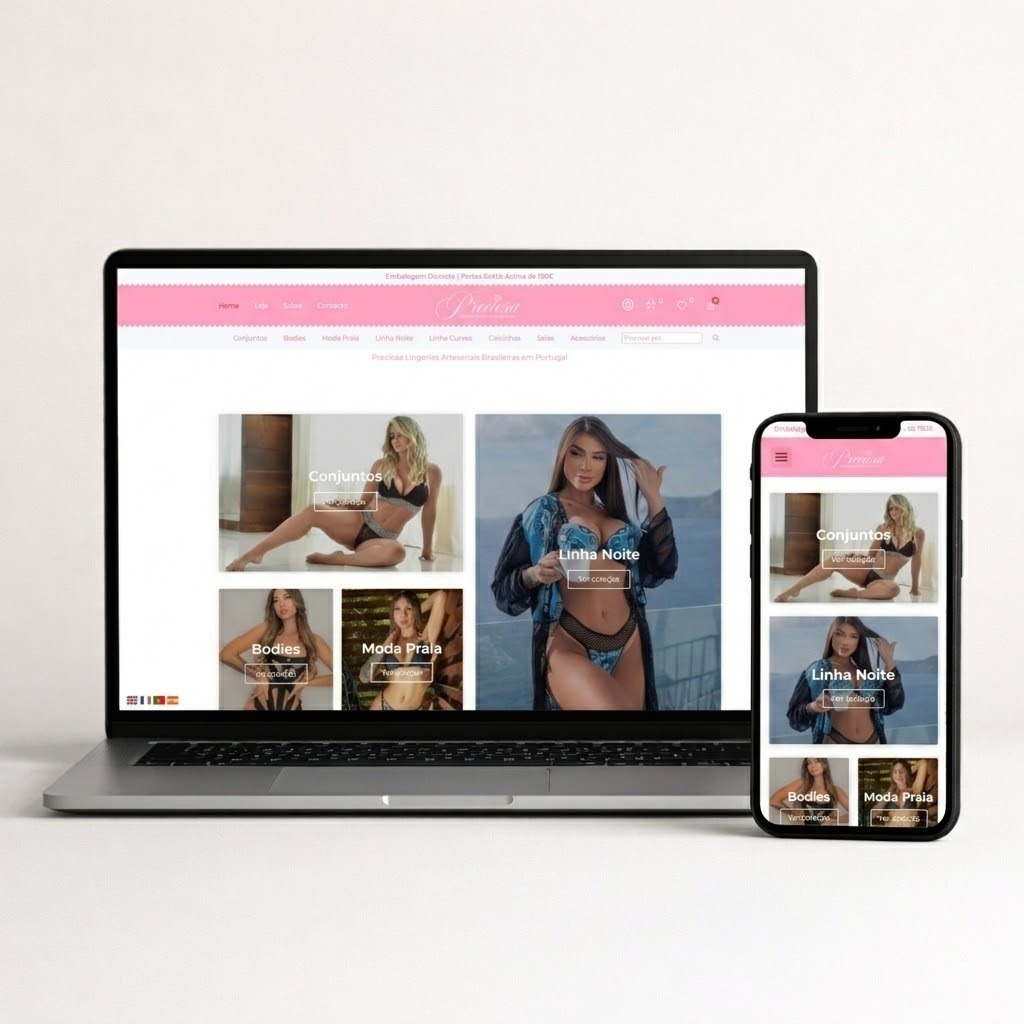
E-commerce
Stores built to sell.
A WooCommerce store where every product page answers a buyer’s doubts before they ask, and checkout takes as few steps as possible. Before you pay for more traffic, look at what the store does with the visitors it already gets.
What’s included
What the work covers.
A plain list of what the project involves, so you can see where the time and money go.
Product pages that convert
Photography, specifications, delivery times and returns, all answered on the page. Every unanswered question is a reason to leave.
A checkout that gets out of the way
As few steps as possible, guest checkout, clear totals and no surprise costs on the last screen.
Catalogue that scales
Attributes, variations, filters and search planned at the start, so they still work at five hundred products.
Multi-language and multi-currency
Where your market needs it, including the tax and shipping rules that come with selling across borders.
Measurement wired in
Ecommerce tracking set up from day one, so you can see where the money stops.
Payments and compliance
Stripe, PayPal, Multibanco and MB WAY where they apply, plus the legal pages and consent handling a store needs.
Process
How a project runs.
Model
Catalogue structure, variations, shipping rules and tax. A mistake here is the most expensive one in a store build.
Design
Category, product, cart and checkout designed as one flow rather than four separate screens.
Build
WooCommerce configured, with payment and shipping tested end to end using real transactions on staging.
Launch
Test orders, tax checks, analytics and abandoned-cart handling, then a review after the first sales come in.
The difference
The usual approach, and mine.
| The usual | This way | |
|---|---|---|
| Product page | Whatever the theme offers | Built around objections |
| Checkout | Default, multi-step | Shortened and tested |
| Speed at scale | Degrades with catalogue | Planned for the catalogue |
| Tracking | Added later, partial | Configured at build |
| Fees | Per-plugin subscriptions | Owned outright |
Questions
What clients ask before they hire me.
Ownership and cost as you grow. WooCommerce has no revenue share and no platform lock-in, and the store lives alongside the rest of your site. Shopify is the better answer for some businesses, and I’ll tell you if yours is one.
Yes, with products, customers, orders and URL redirects, so you keep the search rankings the old store earned.
Yes: Stripe, PayPal, Multibanco and MB WAY as relevant, tested with real transactions before launch.
Yes, multi-language stores are part of the portfolio. Decide before the build if you can, because adding it later is a lot more work.
You can add products and edit content yourself; that’s part of the handover. Bigger changes can be quoted as they come up, or covered by a monthly arrangement.
Also available
Other services.
Next step
Send me the brief.
Two or three lines about the business and the goal are enough to start. I reply within one business day.